
In today’s fast media climate, it’s easy to move on quickly to the next big thing. We sprint towards the offseason after the Minnesota Timberwolves were taken apart in their six-game, second-round playoff series against the San Antonio Spurs. After watching that series unfold, the clear takeaway is that more will be needed if the Wolves want to climb the mountain and get past the two apex predators in the Western Conference.
But before we turn the page to the draft, free agency and the trade machine, it’s important to find something to celebrate from this playoff run. It’s OK to be disappointed in the team and look for ways to improve, but it is also important to appreciate the fun parts that this team gave us this season. There are clear building blocks and fun things that we can take from the 2025-26 playoff run, and we should take a moment to admire those things.
These playoffs saw another epic takedown of the Denver Nuggets and the Wolves competing with the Alien in a fun second-round series. There are plenty of things that can be built on for this immediate offseason and as the team moves forward.
Naz Reid
Naz Reid has always been a beloved underdog success story for the Wolves from going undrafted to becoming the Sixth Man of the Year and a key part of the most recent stretch of playoff runs.
But, after signing a five-year, $125 million contract extension this last offseason, it was reasonable to expect another leap to be made. While many pushed for a reconfiguration of the roster to allow Reid to start alongside his young core compatriots in Anthony Edwards and Jaden McDaniels, that still didn’t happen heading into the 2025-26 season.
Minnesota brought back Julius Randle and ran back the same frontcourt pairing of Rudy Gobert and Julius Randle to this campaign. To a degree, it made sense mostly because of postseason hoops. Reid has had a tumultuous playoffs each of the last two seasons and showed some volatility when it came to his production. You combine that with how great Randle was in the playoff run last year, and the picture as to why they opted to have Reid be the sixth man becomes a bit clearer — they didn’t feel ready to hand him the starting power forward keys.
That all changed this postseason.
While Reid didn’t have the best first round series against the Nuggets, he still popped enough to slowly change that narrative. He completely put that behind him in the San Antonio series. In the second round, Reid was largely the second best player for the Wolves over the six games and was the key to Minnesota’s offense against Victor Wembanyama.
Reid averaged 14.3 points, 7.7 rebounds and 2.2 assists per game while shooting 50.8% from the field, 45.5% from three and 70% from the free throw line against the Spurs over the six games. While some of those numbers came in garbage time as Spurs blew out the Wolves in three of the six games, he still was highly impactful in his minutes. The biggest things that stuck out were his ability to attack mismatches to get to his post hook game, his relentless effort on the boards to help end possessions and get the Wolves extra shots, and a few eye-popping internal passing chops that especially stuck out in crunch time of the Spurs’ win in Game 4.
According to Cleaning the Glass, Reid led the team in net rating for the playoff run with a +9.7. Jaden McDaniels was second on the team with a +3.2. Most of this came from the offensive side of the floor with a +15.0 offensive rating when Reid was out there. But Reid still showed some good defensive possessions when he was not out there as the de facto center on that end of the floor.
Sometimes you just need to see something to believe it, and Reid’s performance in these playoffs should make the front office and fanbase feel good about him moving forward.
TJ Shannon the Point Guard
Terrence Shannon Jr. had a 2025-26 season that was marked with chaos. He started with a few solid games at the very beginning of the season, but a foot injury took him out for an extended period as everything seemed to go wrong when he was on the court. It got to the point that he was effectively out of the rotation as the regular season ended and the postseason began. This all changed in Game 4 of the Nuggets series after Donte DiVincenzo went down with an Achilles tear and Anthony Edwards with the hyperextended knee.
Shannon Jr. was thrust into the rotation with a need for a spark. He provided just that and so much more.
Shannon Jr. played in the final three games of the Denver Nuggets series and burst on to the scene. He scored 14 points per game and helped lead the charge to expose Nikola Jokić’s lack of rim protection. Shannon Jr. came in with no fear and took it right at the Denver defense and was a huge swing factor in the Wolves ending their season. His biggest highlight came on an and-one at the end of Game 6 that helped bury the Nuggets. He was given the ball to initiate with it in his hands, and sped by his defender for the clutch bucket.
Shannon Jr. wasn’t the most efficient in the Spurs series, but he still found a way to average double-digit points in the matchup. The through line for this massive boost in production was that Chris Finch put the ball in Shannon Jr.’s hands more to let him orchestrate instead of playing off the catch from the corner. This is what made him such an explosive player in college and part of the reason his transition to the NBA was more difficult. But, partly out of necessity, the ball found its way into Shannon Jr.’s hands and he delivered. He played the point for the majority of the time Edwards was off the floor and helped to initiate offense, and was much better because of it. Finch said as much in one of his postgame interviews.
This usage led to easily the best stretch of basketball that Shannon Jr. played all season and provides a way to help him be productive in future seasons. This development was a huge plus of this playoff run, as having a guy that can be a good role player — especially with the ball in their hands — on a rookie scale deal is a big pro in this iteration of the CBA. If you are to gleam any positive from the injuries that ravaged the postseason for the Wolves, this would be it.
Toughness and Trash Talk
Now for the intangibles. The two biggest positives and memorable things from this playoff run was McDaniels calling out the entire Denver Nuggets roster and Edwards coming back from a hyperextended knee injury in nine days.
The Wolves have developed a reputation for their trash talk over the years that usually stems from the ever-charismatic star in Edwards. One of the things that can be appreciated about this team is their unwillingness to relent even when the chips are not in their favor. Many people will wait until they are up to start talking the talk, also known as “front-running” — but not the Wolves. McDaniels ignited a war against the Nuggets and their fans by listing the whole roster by first and last name and calling them all “bad defenders.” This quote came in a 1-1 series, which McDaniels followed up with 20 points and 10 rebounds while shooting 9-for-13 from the floor and smothering Jamal Murray in an emphatic Game 3 win. After the Nuggets took Game 5 in convincing fashion post DiVincenzo and Edwards injuries, McDaniels sat in front of the media and answered every question that was asked. This press conference also included the quote “we’re gonna win the next one.” He followed that up with a 32-point masterclass to send Denver packing.
McDaniels stood in the crossfire and didn’t blink. Everyone is starving for the old school, trash talking rivalries that older fans recall fondly from the old NBA days, and McDaniels delivered. This narrative from the series was a blast to experience in real time.
While every team experiences injuries, and unfortunately seems to be a trend in the postseason at large over the last few years, the toughness the Wolves displayed in the wake of these injuries was an impressive sight to behold.
DiVincenzo had the most gut-wrenching injury of the trio that impacted the team. Seconds into Game 4, he went for an offensive rebound on his own miss and hit the ground. When the replay was aired, there was no doubt as to what happened. The raw emotion and the jarring feeling that ensued is a uniquely human experience that leaves you feeling adrift. Despite the devastating injury, DiVincenzo insisted on walking off the floor himself. A small, but significant moment from the playoffs that signifies a resistance to be taken down by this setback — a message that DiVincenzo will not succumb to the injury, and that he has the power to come back from it. This, and DiVincenzo’s need to be back with his team and in the building as soon as he could to support his squad, was an enticing display of toughness that everyone can appreciate.
Ayo Dosunmu was the smallest injury storyline of the three but still a display of the toughness that permeates this team. He had been dealing with the calf injury since the close of the regular season and got healthy enough to start the playoffs with a clean bill of health. When the lingering injury started to hinder Dosunmu, it would have been understandable to take a long-term approach to recovery. He is a free agent and just watched his teammate experience the biggest injury that this type of soft tissue soreness could lead to. Instead, he missed two games over the playoffs and gutted his way through the pain. While he wasn’t as impactful post-injury, it was still an exceptional showing all the same.
Reid already got his own section, but a this section wouldn’t be complete without a quick shoutout for playing through his shoulder injury and a Wembanyama elbow in this postseason.
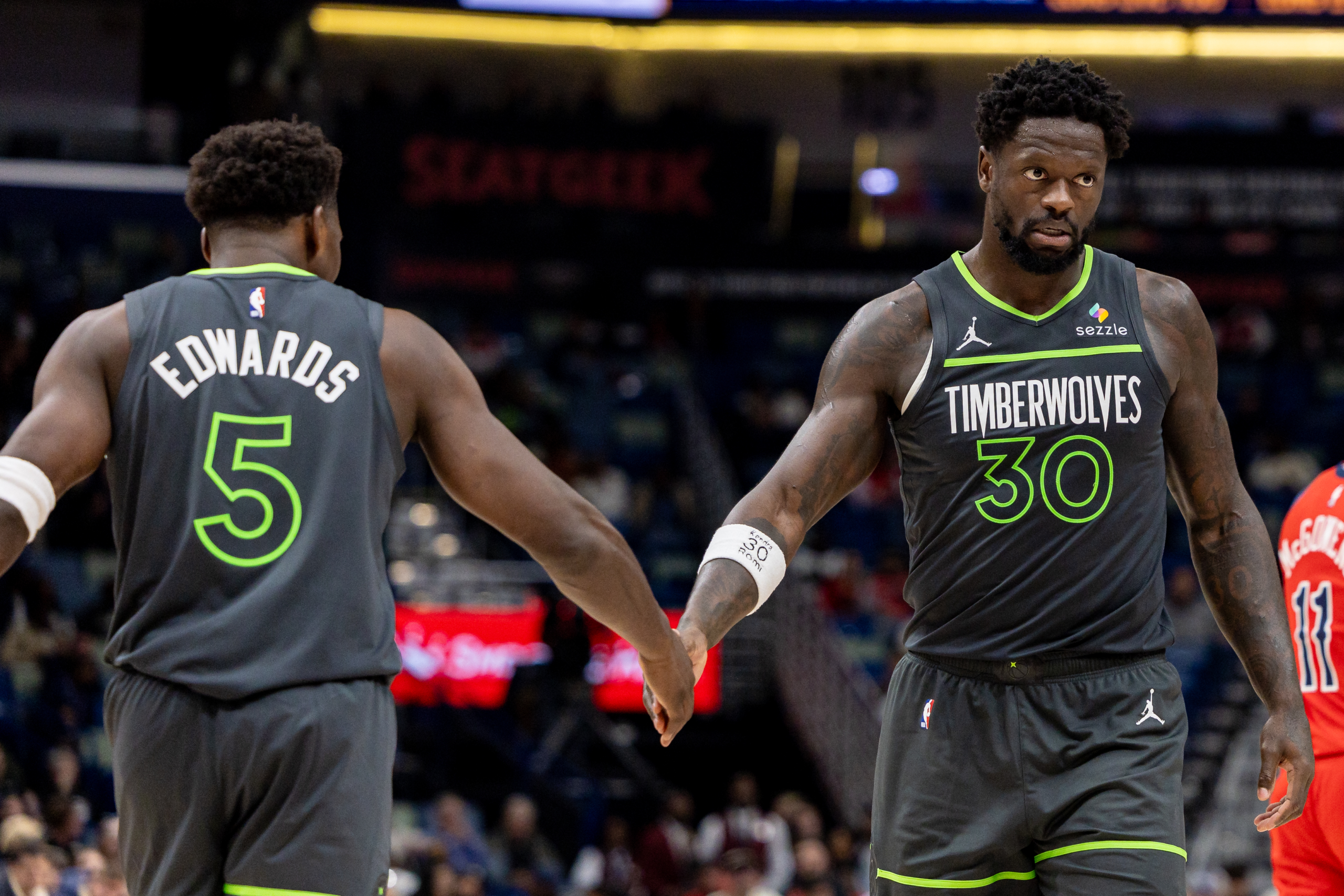
Anthony Edwards the wolverine should not be lost in this conversation either. In Game 4 of the Denver series, when Edwards landed on his knee, the worst thoughts crept into everyones brains. We all saw what it looked like and it wasn’t hard to come to a conclusion that everyone was trying to avoid. When the hyperextended knee diagnosis came out, there was a collective sigh of relief. What followed was healing straight out of a superhero comic book.
Edwards worked feverishly, around the clock to return to play and try to lift the Wolves in their second round matchup. He was already hurting from runners knee before this injury, and yet he persevered and did what was needed to help his team. This second return was even more unbelievable than the first. To work as he did to return and still be impactful, if hindered, was incredible. That was special, special stuff that we were witnessing and it is important that isn’t thrown to the wayside as we reflect on the season.
While this season did not end as everyone had hoped, there was plenty of positives to take away that will help direct this teams decision-making moving forward. It’s OK to enjoy the journey, especially when the journey created these types of moments.