
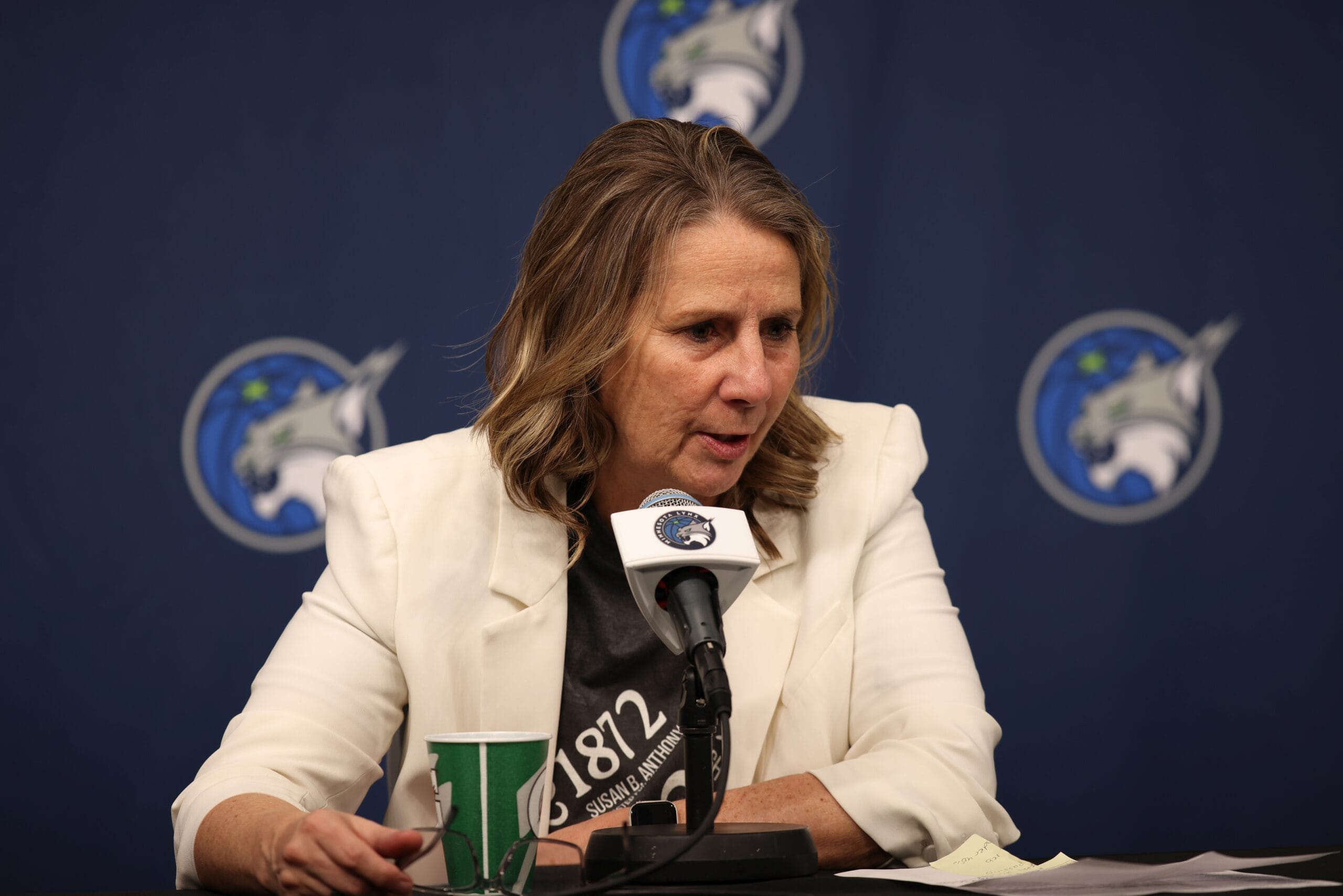
There are three certainties in life: death, taxes, and Cheryl Reeve figuring it out.
Every couple of years, the Lynx seem to lose key players, face major roster questions, and are predicted to slide down the WNBA standings. Yet every time, Reeve and her staff somehow put the right pieces together anyway.
Maybe it’s bringing in the veteran nobody else fully appreciated, like with Courtney Williams, Alanna Smith or most recently Natasha Howard. Maybe it’s a role player who suddenly looks indispensable, such as Cecilia Zandalasini or most recently Nia Coffey. Maybe it’s the rookie who develops faster than expected, such as Dorka Juhász or, currently, Olvia Miles.
Often, it’s just Reeve’s ability to take a bunch of pieces and make them into a team. Whatever the formula happens to be, it rarely looks the same — but it almost always works.
That’s why Minnesota’s league-best 9-2 start entering a game against Dallas on June 9 shouldn’t be surprising. And yet, somehow, it still is.
The Lynx have opened the season without Napheesa Collier, the perennial MVP and Defensive Player of the Year candidate, and foundation of everything they do. Most teams lose that player and spend the first month simply trying to stay afloat. Back in April, a lot of Lynx fans would have been perfectly happy with a record around or above the .500 mark come June.
Instead, Minnesota is once again at the top of the standings.
One of the Best to Ever Do It
We’re less than a quarter through the season, and it’s obviously far too early to say where this season is headed. As learned so painfully last year — championships are won in September, not June.
But this start does raise an interesting question: Where would a successful 2026 rank among Reeve’s best work?
To answer that, we first need to decide what her best work actually was. Not necessarily the seasons with the most wins. Not necessarily the championship seasons.
The seasons where coaching mattered most.
10. 2025 (34-10, Semifinals)
This probably feels a little low for a team that finished with the best record in the WNBA and the most regular season wins in WNBA history.
But expectations matter.
Minnesota won 34 games, earned the No. 1 seed, and looked like the clear favorites. Then everything unraveled in the semifinals against Phoenix. The Lynx blew a 20-point lead in Game 2 a 13-point fourth-quarter lead in Game 4, and were eliminated in four games. The regular season was outstanding, but the postseason was arguably the most disappointing of Reeve’s career. The 34 wins keeps this season on the list, but just barely.
9. 2016 (28-6, Finals)
A year after winning its third championship in 2015, Minnesota produced one of the best regular seasons in franchise history, going 28-6 behind a roster featuring Maya Moore, Sylvia Fowles, Lindsay Whalen, Seimone Augustus and Rebekkah Brunson. Reeve won her second Coach of the Year honor, and Minnesota once again looked like a title favorite.
Then, the Finals happened — and we don’t need to talk about that one.
The Finals loss prevents 2016 from climbing higher, but unlike 2025, this season felt more like an excellent team falling short against another great than a championship favorite unraveling early.
8. 2012 (27-7, Finals)
The defending champs came back and nearly did it again.
Minnesota matched its 2011 win total and returned to the Finals before falling to the Indiana Fever. In another era, a Finals appearance would rank among the greatest seasons in franchise history. For a team that had just established championship expectations, it felt like a missed opportunity.
Still, a 27-win season and another Finals appearance is difficult to dismiss.
7. 2023 (19-21, Semifinals)
Bear with us here. This might be the most underrated season of Reeve’s career.
The Lynx entered the year looking like a team stuck between rebuilding and contending. After opening the season 0-6, Minnesota looked headed toward the WNBA Draft Lottery. Instead, the Lynx went 19-15 the rest of the way, became one of the league’s best defensive teams, and nearly upset Connecticut in the semifinals. In hindsight, this wasn’t just a surprising season — it was the first sign that the Lynx rebuild was already ahead of schedule.
The record of this season says 19-21, but anyone around in 2023 knows the coaching job was significantly better than that.
6. 2020 (14-8, Semifinals)
The Wubble season deserves its own category.
The dynasty was gone. The league was navigating unprecedented circumstances. Moore wasn’t coming back. Most preseason projections had Minnesota in the middle of the pack. Yet, Reeve responded by winning her third Coach of the Year honor and leading the Lynx to the semifinals.
Without the overwhelming talent of the championship teams — and starting a 5-foot-5 second-round rookie point guard — this season offered one of the clearest examples of Reeve’s ability to maximize a roster.
5. 2013 (26-8, Champions)
At their peak, the Lynx felt inevitable.
Moore was a superstar in her prime. Augustus and Whalen were still elite, and Brunson remained the perfect glue piece. Minnesota rolled through the season and captured its second championship in three years. Great coaching still mattered, but this wasn’t a season where Reeve needed to manufacture contention out of thin air.
The reason this season lands fifth rather than first isn’t because of the results. It’s because this roster did what it was supposed to do — win.
4. 2017 (27-7, Champions)
Dynasties are difficult to build. They’re even harder to sustain.
By 2017, Minnesota had already been to five Finals in six years. The Lynx were no longer the upstart challenger. Every year, they were the hunted. Every team on the schedule circled Minnesota and every playoff series became a referendum on whether the dynasty was finally over.
Yet, Reeve kept the machine running, squeezed everything she should out of that group, and delivered title No. 4.
3. 2015 (22-12, Champions)
There may not be a more impressive postseason run on Reeve’s résumé.
The Lynx acquired Fowles in the middle of the season and spent months trying to integrate one of the league’s most dominant bigs into an established championship core. By the playoffs, Minnesota looked like an entirely different team. Reeve found the right combinations, the right roles, and the right timing.
The result was a third championship, led by Fowles as Finals MVP, and one of the most impressive examples of in-season adjustment the W has ever seen.
2. 2011 (27-7, Champions)
Every dynasty has an origin story. This was Minnesota’s.
The roster was loaded with talent, but talented teams fail all the time. Reeve inherited a franchise that had never won a championship and transformed it into the gold standard of the WNBA in just her second season.
The culture, expectations, accountability and identity that defined the next decade all started in 2011.
1. 2024 (30-10, Finals)
This remains the answer.
Not because Minnesota reached the Finals. Because it almost won a title that year.
Entering the season, New York and Las Vegas dominated every championship conversation. Minnesota had Collier, some underwhelming new pieces, and a whole lot of questions. By the end of the year, the Lynx were in the Finals.
Williams and Smith came in with almost no fanfare and became two of the league’s best acquisitions. Minnesota almost immediately developed one of the league’s best defenses and clearest identities. Reeve won both Coach of the Year and Executive of the Year. Most importantly, the Lynx consistently played above the level of their talent. Reeve found the pieces everyone else had overlooked and put them in positions to succeed.
Simply put, there might not be another coach outside of NBA coaching legend Gregg Popovich who takes that roster to within a questionable call of winning it all. That’s what separates this season from the championship years.
The 2011, 2013, 2015 and 2017 teams were loaded with stars. The 2024 team was great because Reeve willed it to greatness.
Maybe that’s why 2026 feels so familiar.
Back in April, the additions of Coffey and Howard seemed just as underwhelming as Williams and Smith did. The 2024 and 2026 preseason power rankings looked eerily similar. Yet, a month into the season, this team is doing what Reeve teams always seem to do: outperforming expectations.
Whether that ultimately leads to another championship or simply another fun, overachieving season remains to be seen.
But the way things look so far in 2026, don’t bet against another Reeve masterpiece crashing this list.