
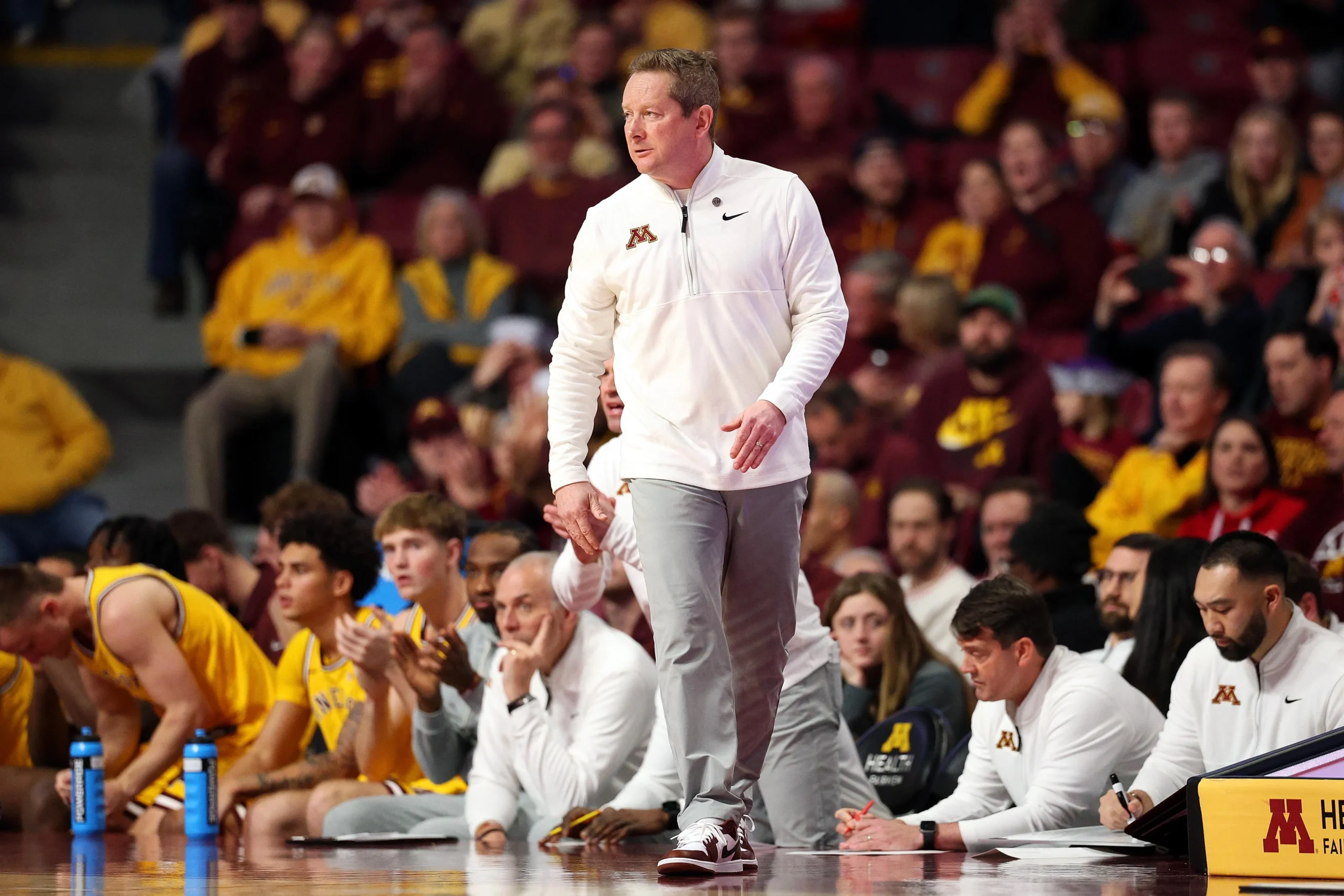
We know, we know … football season is just getting underway. But that doesn’t mean we can’t get excited for college basketball season too!
The nonconference schedule is always a hot-button issue for Minnesota Golden Gophers men’s basketball fans. Delusional fans want Duke and Kentucky playing at The Barn. More reasonable fans would like 1-2 high-major opponents per season mixed in with the usual cupcakes and a tournament in an exotic destination.
Minnesota’s nonconference schedule has officially been released, so let’s see how this year’s nonconference schedule stacks up against years past, and who the opponents are.
Power Conference Opponents
As the schedule stands, the Gophers will have five major conference opponents in the nonconference portion of the schedule. In the two games at the Shriner’s Children’s Charleston Classic, the Gophers will match up against Oklahoma State and Utah.
In addition to those two neutral site games, Minnesota plays at Cincinnati on November 9th, against California in Sioux Falls on November 28th and against SMU on December 12th at a “neutral site” in Frisco, Texas. None of these, as you’ll note, are home games. That’s no doubt disappointing to Gophers fans, but this year constitutes the most major conference opponents for Minnesota since 2019-20 and should give Gophers fans some optimism.
SMU is the only nonconference opponent Minnesota plays that made last year’s NCAA Tournament. The Mustangs, coached by Andy Enfield, were 20-14 and lost to Miami (Ohio) in the first round.
The Cincinnati game is part of a home-and-home series. This year, the Gophers will head to Fifth Third Arena. Next year, Cincy will return the favor with a game at The Barn. Cincinnati has a great basketball tradition going back to Oscar Robertson, Nick Van Exel, Kenyon Martin and coach Bob Huggins. However, Cincy didn’t bring back Wes Miller due to missing the tourney in five straight seasons.
This is a really solid game for Minnesota. The Bearcats hired former Utah State coach Jerrod Calhoun to replace Miller. Medved and Calhoun are familiar with each other from their time in the Mountain West.
Preseason rankings according to Bart Torvik
| Team | Preseason Rank |
|---|---|
| Minnesota (Big Ten) | No. 81 |
| Cincinnati (Big 12) | No. 42 |
| California (ACC) | No. 89 |
| SMU (ACC) | No. 53 |
| Oklahoma State (Big 12) | No. 52 |
| Utah (Big 12) | No. 78 |
Cross-Town Rivalry Renewed?
As previously written, Minnesota has added cross-town opponent St. Thomas to its schedule for the first time in the Tommies’ Division-I era. Along with North Dakota, we’ll see the Gophers play two regional Summit League teams in the first week of the season. If you’re going to play mid-to-low major teams, most fans would agree that scheduling regional opponents with local kids on the roster is ideal and as a result can bring in a few thousand fans in attendance. It certainly beats playing low-major teams from the South with ZERO chance of bringing in fans.
This will be the first time since 2015-16 that Minnesota scheduled two border state opponents in the nonconference portion of the schedule. That season, the Gophers lost back-to-back games to South Dakota and South Dakota State. Gopher fans hope this year’s experience goes differently.
The St. Thomas game on November 6th should bring out both Gophers and Tommie fans alike. The next day, the Gophers’ football team plays at home against UCLA, making for a fun, festive weekend in Dinkytown.
How Does This Season Compare to Previous Seasons?
When it comes to tournament selections, the nonconference part of the schedule can make or break your bubble. Unfortunately, Minnesota hasn’t been close to the bubble in some time. With high hopes in Dinkytown this season, let’s look at how this schedule compares to previous seasons.
Let’s start with the positive. This is the most high-major opponents in a nonconference schedule since 2019-20. Generally, more high-major opponents means the coach has more confidence in his team and wants to test them early. In 2019, the Gophers were coming off an NCAA Tournament appearance, beating Louisville before falling to Michigan State in the Round of 32. This year, they return most of their contributors from 2025-26 and a second year in Niko Medved’s system.
Despite the increase in high-major opponents, the overall strength of schedule in the nonconference portion isn’t that much different than the previous three. For comparison, we looked at Medved’s first two seasons, Ben Johnson’s final two seasons and Richard Pitino’s final three seasons, excluding COVID-shortened campaign 2020-21.
| Season | Average ranking of opponents* | Coach |
|---|---|---|
| 2026-27 | 199* | Niko Medved |
| 2025-26 | 216 | Niko Medved |
| 2024-25 | 193 | Ben Johnson |
| 2023-24 | 257 | Ben Johnson |
| 2019-20 | 130 | Richard Pitino |
| 2018-19 | 168 | Richard Pitino |
| 2017-18 | 197 | Richard Pitino |
What’s Not to Like About the Nonconference Schedule
Having zero major conference opponents at home in the nonconference schedule is a big bummer for season ticket holders. Including St. Thomas at home will help bolster attendance for at least one game, but November and December will be a rough stretch for fans.
Outside of the Tommies and the lone home Big Ten game in early December, there are not many interesting games at The Barn until January. Two games of interest at home over the first two months won’t sell many tickets.
And although the average ranking of opponents will be better than last year, it’s still not great. There are a lot of bad teams on this year’s schedule. Five teams — North Dakota, Southern, Western Illinois, Texas Southern and Alcorn State — all go into the year 318 or worse in Bart Torvik’s rankings. There are only 365 teams in Division-I men’s basketball.
Predictions
We believe Minnesota will go 9-3 in their nonconference slate this year. Our guess is the Gophers lose at Cincinnati, lose one in Charleston, and they lose against SMU in a virtual home game for the Mustangs.
Minnesota should win every home game, plus the game against California in Sioux Falls, and get one in Charleston.
What does that mean for NCAA Tournament potential? As history has shown us, a .500 record in the Big Ten likely means an NCAA berth if there are no bad losses. Ten wins in the Big Ten would give the Gophers a 19-13 regular season record. Depending on who those wins come against, they could be a bubble team or safely in.
If Minnesota goes 11-1 in nonconference play with a win at SMU or Cincinnati, then you’re talking a larger margin of error in the Big Ten.
Overall, the strategy is solid here from Medved and Minnesota: Virtually unlosable games at home paired with quality road and neutral site games. Winning road and neutral site games mean a lot to the NCAA Tournament Selection Committee. If the Gophers can go 3-2 in those high-major games AND put together a middle-of-the-road finish in the Big Ten, they could be a bubble team come Selection Sunday.
Leave a Reply