
By the time late-July hits during the NBA cycle, there is usually nothing left to talk about. Fans start to take their mental break for a month-plus before training camp kicks off for the next season, then it’s time to tap back in.
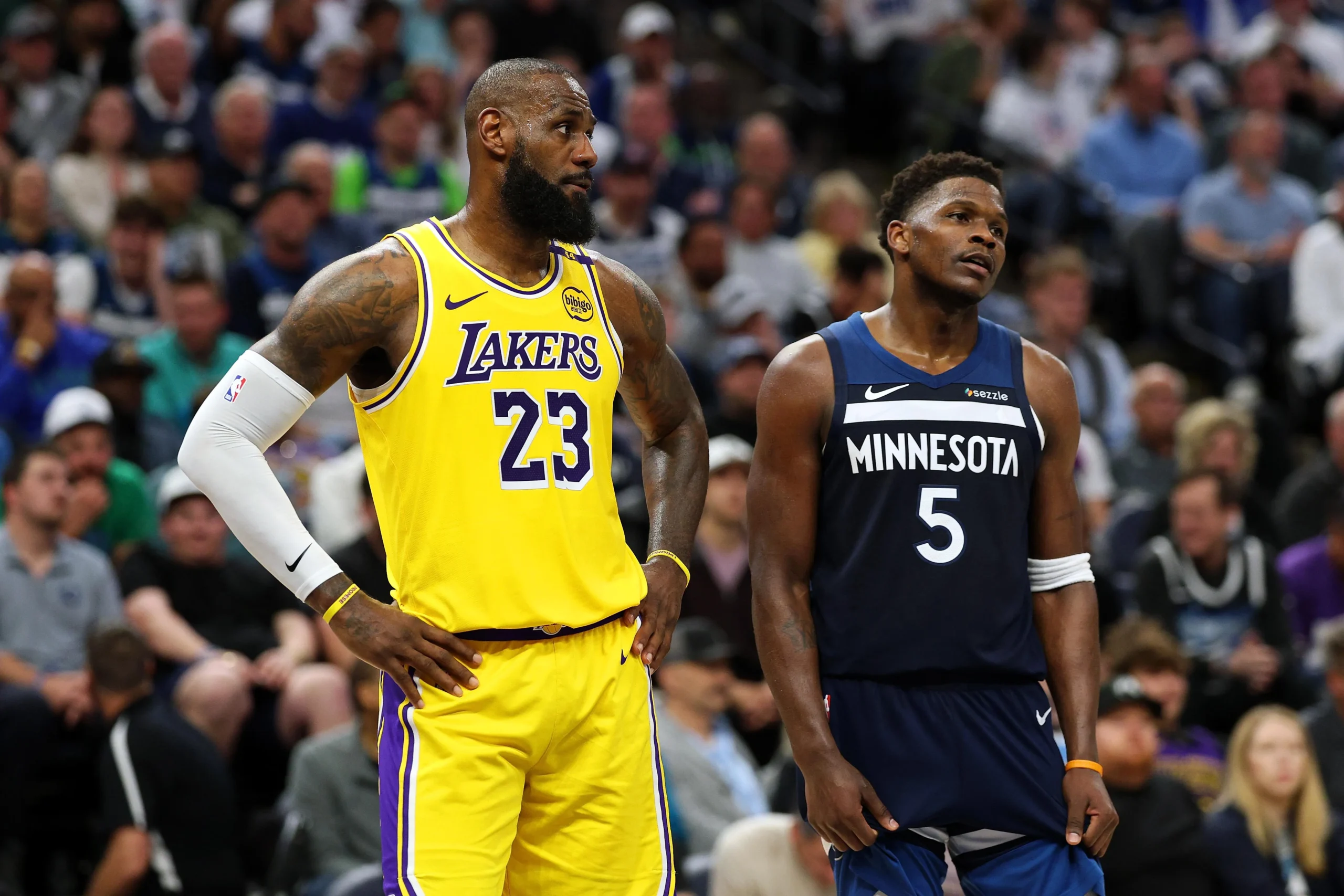
Because of the LeBron James sweepstakes, that delayed the dead zone of the offseason and gave content for far longer than usual. While the Minnesota Timberwolves were always a long shot to convert on James, they were in it until the very end before he decided to take his talents to the east coast and the Philadelphia 76ers.
So, where does that leave the Wolves as they pivot to other options?
Why Didn’t LeBron Come to Minnesota?
First, it’s important to talk about why James opted against coming to the Twin Cities. This is biggest question that will linger in the minds of Wolves fans the rest of the offseason.
When James opted out of his contract and the rumors started to float around about who his next team would be, there were many prominent media figures that pointed to Minnesota as his best option. They stated that the Wolves had a ready-made spot for him to start at the power forward, he would still be extremely important to the team and play a huge role in their potential success for this season. And Minnesota would have the infrastructure around him to take some of the load off on both ends of the floor to allow him the bandwidth to do what he’s best at.
Perhaps the biggest reason as to why James chose to go to the 76ers instead of the Wolves is because of the factors that come with the Eastern Conference vs. the Western Conference. There’s no arguing that the East has been revamped for this season — Jaylen Brown joining the 76ers, the Miami Heat trading for Giannis Antetokounmpo, the New York Knicks as defending champions, the Indiana Pacers back at full strength, and even the Orlando Magic with a new coach and the Washington Wizards with their veteran trades from last season (I won’t even mention the debacle of the Kawhi Leonard trade). But, while the East may be the deeper conference on paper in terms of quality teams, the West still has two titans in the Oklahoma City Thunder and San Antonio Spurs that will be a struggle for any team to topple both just to make it to the NBA Finals.
It would have been easy for James to go back to Cleveland or Miami, or head to Golden State to play with Steph Curry and Draymond Green, but you can’t blame him for wanting to head to the conference that has just one Goliath (at the moment) that would need to be taken down to reach the Finals, even if the average quality of opposition is higher. What should sting a bit more for Wolves fans is that James chose Philadelphia mainly due to the potential of winning, something that was Minnesota’s strongest argument and resulted in the Wolves being a legitimate option.

While it may be true that the external factors of the East could lead to a higher chance of success for Philadelphia, it does seem like the 76ers have more internal question marks about their team that have me hesitant to predict wild amounts of success for that roster.
Comparing to Minnesota, who would have had LaMelo Ball and Anthony Edwards as offensive engines — who are both still very good off-ball players — and Jaden McDaniels and Rudy Gobert — who can both insulate the roster defensively — Philadelphia has a lot more things it will need to answer, especially on the defensive end of the floor. The starting lineup on paper looks like a problem offensively, but there are reasons to worry about the defensive upside of the group. Tyrese Maxey and VJ Edgecombe are tenacious and athletic defenders, but lack size to be true perimeter stalwarts. Brown and Joel Embiid are both seemingly negative defenders, and Embiid has struggled to defend the rim due to the injuries that have plagued his career up to this point. It seems like a lot of the perimeter responsibilities will fall on Edgecombe, who will be expected to be Jaden McDaniels-esque on that end of the floor. That feels like a lot to put on a second-year player, especially without a surefire safety blanket at the rim behind him.
With that being said, it will be very exciting to watch a group as talented as they are take the floor every night and it will be fascinating to see what they do to try and scheme up their defense to cover up for their deficiencies.
What are the Wolves’ Options Now?
It was understandable for the Wolves to wait for James to make his decision before pivoting elsewhere — when a player like that is considering your team, you wait to see what happens. But because of the timing of all of that and where we are in the offseason, the power forward position is down to slim pickings when it comes to external options.
The top player still on the market is Jonathan Kuminga, who Michael Scotto of HoopsHype recently reported interest from Minnesota. While Kuminga has had a tumultuous NBA career so far, he is easily the most talented free agent option left on the board. While there are a few other teams in the mix that could offer him a similar role with more money, the Wolves could still be an intriguing option if the offers on the table for his services are lackluster as the offseason drags on. While Minnesota does not have a lot of money to throw around, a one-year prove-it deal could be intriguing to Kuminga, giving him the opportunity greatly increase his value with a starting opportunity on a very good Western Conference team in hopes of inking a long-term deal next offseason at a better contract number.

The other free agent options are a lot less exciting than Kuminga, but two names stuck out when scrolling through the list. The first is Nicolas Batum. His player option was declined by the LA Clippers, and while his stats were nothing to write home about, he still could provide another decent option at this position of need. A season ago, he shot 40% from three on three-point attempts, played in 74 games and has familiarity with Gobert on the French national team. He could also provide some veteran leadership in a locker room that lost Mike Conley to Boston this offseason. The other option could be a fun homecoming storyline in Kevin Love, who only played 37 games last season (although it was for a tanking Utah team). Love would go in the same bin as Batum as a veteran player who can stretch the floor at a position of need. Both of these guys are not starting caliber, but could still be options if the Wolves are looking at free agent options.
When looking at external options, the last thing to keep an eye on would be the date of Sept. 10. Josh Green can be aggregated in a trade 60 days after being acquired, so the Wolves could still decide to go after a power forward at that time while using Green’s salary in a deal. Minnesota could technically trade him before then, but any trade he is in until Sept. 10, he has to be the only player going out in that trade.

Internally, there are a few other options to look at for possible fifth starters at that power forward position.
Positionally, the Wolves only have one true power forward on the roster in Trey Lyles. Lyles spent the last season playing overseas for Real Madrid and made his way back into the NBA this year after signing a deal this offseason with Minnesota. He is a true power forward in size and has the ability to stretch the floor, but relying on him to have a huge role after being out of the NBA last season would be questionable for a team trying to compete in the Western Conference. If Lyles does hit, even in a reserve role, that would be a big development for the Wolves.
The other options would be to fit a player who plays a different position into the power forward-sized hole that is present on the roster. McDaniels is the first player that you think of because of his height. There is some intrigue there, and although he lacks the weight of a true power forward, lineups that head coach Chris Finch has deployed with McDaniels playing the power forward spot in years past have been extremely fun to watch. McDaniels is as versatile as a player can get, and the thought of him getting some reps at that spot on offense and playing off-ball defensively would be an extremely interesting proposition, though it is hard to have him playing in the dunkers spot with Gobert primarily occupying that space. Finch even commented on this idea in a press conference earlier this summer, expressing some hesitation to move him there full-time.
After that, it’s a morass of players that are wings who could have enough size to play the position. Green, Jaylen Clark, Terrence Shannon Jr. and Ayo Dosunmu all have claims in different ways to fill that role themselves. While technically they or McDaniels would be listed at the power forward slot, none of them would be playing that position and more be viewed as the fifth starter. While this will lead to more options and lineup combinations, it does raise some size question marks especially when matching up in a playoff setting.

Green could be a versatile wing who can shoot the three, Clark could help take some of the point of attack defense responsibilities off of McDaniels’ plate, Shannon Jr. could provide some pop from that slot and Dosunmu could meld into a lethal off-ball attacker and shooter. However, all have question marks about their viability.
Keeping Dosunmu coming off the bench could be more valuable for Minnesota because his value would be stronger compared to making him the fifth starter, though it is the talent play to have your best five players out there at the same time. Shannon Jr. is an interesting option and he is probably next up in terms of talent, but as the Wolves found out last year, he plays best on the ball and there is not a ton of room for that with Edwards and Ball next to him in the starting lineup. It is very intriguing to think about the ways Shannon Jr. could be deployed next to those guys while still putting him in a good position to succeed. Think back to early in McDaniels’ career, when he had a similar issue — he was playing out of the corner and expected to sit there and make catch-and-shoot corner threes, but struggled in that part of his game. That was when Finch moved him to playing more on the wing that he started to pop more offensively.
There are pros and cons to the options to play at power forward internally, but each could bring their own specific things to the table, which could make it fun to toggle and have that optionality on the roster. The good news is that Minnesota has time — time to vet these internal options and time to find an external option that could fit this new Ball iteration of the team.
While James was the prize of the offseason, it’s time for the Wolves to pivot as the season inches closer. What will they do? Only time will tell what Finch and the coaching staff does to fill a clear need on this squad as currently constructed.